Soil Health••10 min•Dr. Wanjiku Mwangi, Lead Agronomist
Soil Testing in Kenya: Why, When, and How to Read the Results
Most Kenyan farms have never had a proper soil test. Here's what the numbers actually mean for your fertiliser bill and your yields.
## The Blind Spot in Kenyan Agriculture
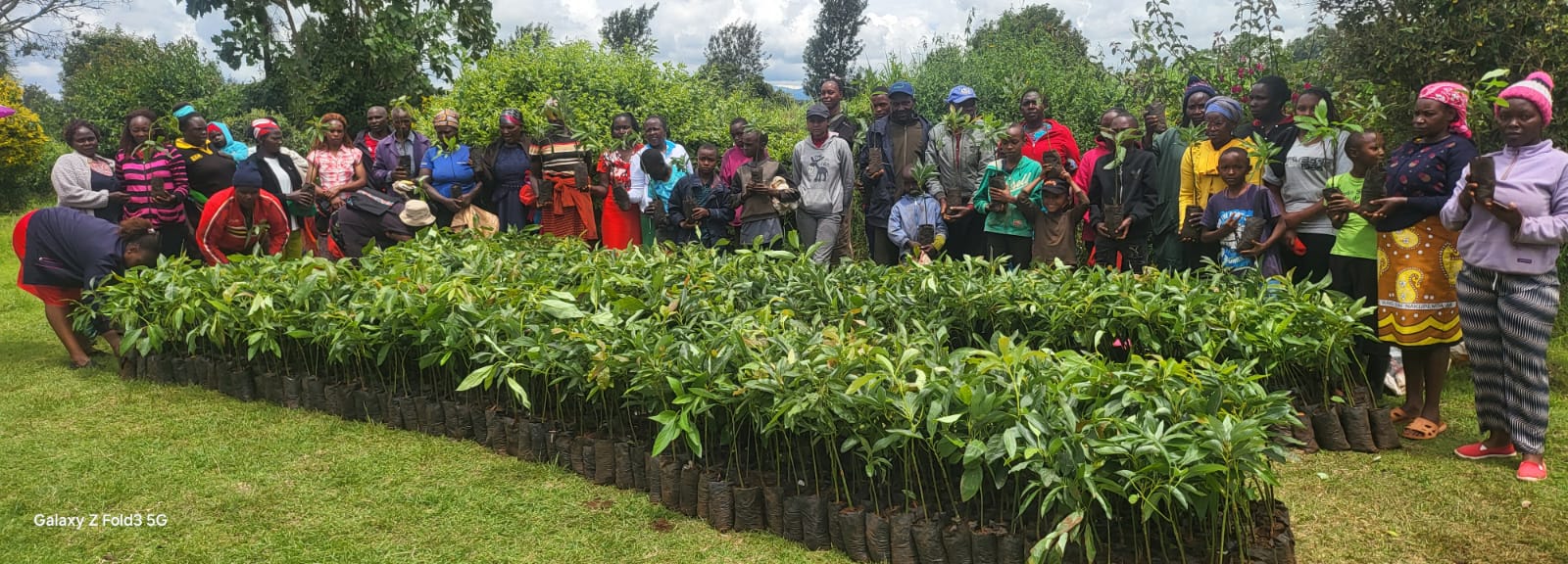
Ask 100 farmers in Kiambu or Nakuru when they last tested their soil. Maybe 5 will have a report — and 3 of those won't understand it. Yet soil pH, nutrient balance, and organic matter determine whether your DAP and CAN actually feed the crop or just leach away.
This field note explains what we test, what the numbers mean, and how to turn a lab report into a fertiliser plan that saves money and builds soil.
---
## What We Test (And Why)
| Parameter | What It Tells You | Optimal Range (Most Crops) |
|-----------|-------------------|----------------------------|
| **pH (H₂O)** | Nutrient availability, microbial activity | 5.5–6.8 |
| **EC (dS/m)** | Salinity — risk of root burn | < 1.0 (sensitive), < 2.0 (tolerant) |
| **Organic Carbon (%)** | Soil life, water holding, nutrient reserve | > 2.0% |
| **Total N (%)** | Nitrogen supply capacity | > 0.2% |
| **Available P (mg/kg, Olsen)** | Phosphorus accessible to roots | 15–30 mg/kg |
| **Exchangeable K (cmol/kg)** | Potassium for fruit quality, water regulation | 0.3–0.5 cmol/kg |
| **Exchangeable Ca (cmol/kg)** | Cell wall strength, pH buffer | 5–10 cmol/kg |
| **Exchangeable Mg (cmol/kg)** | Chlorophyll, enzyme activation | 1–3 cmol/kg |
| **S, Zn, B, Cu, Fe, Mn** | Micronutrients — yield limiters at low levels | Crop-specific |
---
## pH: The Master Variable
In Central and Rift Valley, we routinely see pH 4.5–5.2. At pH 5.0:
- **Aluminium toxicity** stunts roots
- **Phosphorus** locks up as aluminium phosphate (unavailable)
- **Microbes** that mineralise organic N go dormant
- **Herbicide carryover** persists longer
**Lime requirement** (tonnes/ha of agricultural lime, 80% CaCO₃ equivalent):
| Current pH | Target 6.0 | Target 6.5 |
|------------|------------|------------|
| 4.5 | 4.5 t/ha | 6.5 t/ha |
| 5.0 | 3.0 t/ha | 4.5 t/ha |
| 5.5 | 1.5 t/ha | 2.5 t/ha |
*Apply lime 2–3 months before planting. Incorporate. Split large rates over two seasons.*
---
## The N-P-K Trap
Most smallholders apply **DAP (18-46-0) at planting** and **CAN (27-0-0) at top-dress**. Two problems:
1. **P builds up** — Olsen P > 50 mg/kg is common. Excess P induces Zn and Fe deficiency.
2. **K is ignored** — maize removes 20–25 kg K/tonne grain. No K = poor grain fill, lodging, low starch.
**Better approach:** Use soil test to blend. Example for 5 t/ha maize target on loam (pH 5.8, P=28, K=0.25):
| Nutrient | Crop Removal (kg/ha) | Soil Supply (kg/ha) | Fertiliser Needed (kg/ha) | Source |
|----------|----------------------|---------------------|---------------------------|--------|
| N | 120 | 30 (from OM) | 90 | Urea (195 kg) + CAN (100 kg) split |
| P₂O₅ | 50 | 40 (high Olsen P) | 10 | DAP (22 kg) — starter only |
| K₂O | 100 | 45 (low exch. K) | 55 | MOP (92 kg) at planting |
**Saves ~3,000 KSh/ha vs. blanket DAP+CAN.**
---
## Micronutrients: The Hidden Yield Limiters
| Element | Deficiency Symptoms | Critical Soil Level | Correction |
|---------|---------------------|---------------------|------------|
| **Zinc (Zn)** | Stunted, small leaves, short internodes (maize, beans) | < 1.5 mg/kg (DTPA) | ZnSO₄ 25 kg/ha soil; 0.5% foliar |
| **Boron (B)** | Hollow stems, cracked fruit, dead growing points (brassicas, avocado) | < 0.5 mg/kg (hot water) | Borax 10 kg/ha soil; 0.1% foliar |
| **Copper (Cu)** | Reclamation (newly limed acid soils), dieback | < 1.0 mg/kg (DTPA) | CuSO₄ 15 kg/ha soil |
*Foliar applications bypass soil fixation — use for rescue. Soil applications build long-term supply.*
---
## Organic Carbon: The Engine
Every 0.1% increase in organic carbon = ~1,000 kg/ha more water held in top 30 cm. In semi-arid zones, that's the difference between a crop and a failure.
**Build it with:**
- Compost/vermicompost: 5–10 t/ha/year
- Cover crops (mucuna, lablab, rye): 3–5 t/ha biomass
- Crop residue retention (don't burn maize stover)
- Rotations with legumes
---
## Sampling Protocol (Do It Right)
1. **Divide farm** into uniform zones (soil type, slope, crop history, management)
2. **1 composite sample per 1–2 ha** (minimum 15–20 subsamples per composite)
3. **Depth:** 0–20 cm for annuals; 0–20 cm + 20–40 cm for perennials
4. **Tools:** Clean auger or panga + bucket (no galvanised — contaminates Zn)
5. **Timing:** Same season each year; avoid sampling within 2 months of fertiliser/lime application
6. **Label:** Farm, block, GPS, date, previous crop, intended crop
---
## Reading Your Report: A Checklist
When the lab PDF lands in your WhatsApp, check:
- [ ] pH: Is lime needed? How much?
- [ ] Olsen P: > 30? Stop applying DAP/TSP. < 10? Band P at planting.
- [ ] Exch. K: < 0.3? Apply MOP/SOP at planting.
- [ ] Ca:Mg ratio: Should be 3:1 to 5:1. If Mg > Ca, use calcitic lime (not dolomitic).
- [ ] EC: > 1.5? Check irrigation water; leach if needed.
- [ ] Micros: Zn, B, Cu — flag any "Low" for foliar or soil correction.
---
## We Can Do This For You
Our agronomists sample, interpret, and write a plain-language fertiliser plan with product rates, timing, and cost estimates. 500+ farms tested in 2023–24. [Book a soil test](/contact?service=soil-testing).
About the Author
DWMLA
Dr. Wanjiku Mwangi, Lead Agronomist
Green Africa Agronomy Team
03Want More Like This?
Monthly field notes in your inbox.
Seasonal alerts, new guides, and project updates. No spam. Unsubscribe anytime.